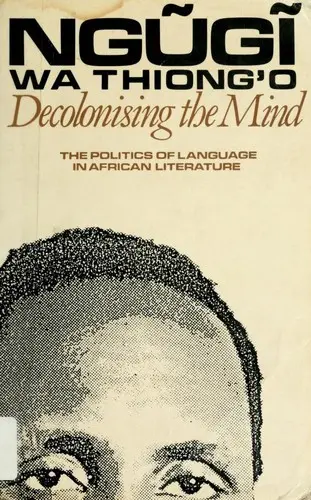
Decolonising the Mind
The manifesto for African literary decolonization. Ngũgĩ argues that writing in colonial languages perpetuates colonialism, then stops writing in English. Changed how the world thinks about language, power, and literature.
The same two or three ideas get restated across all four essays without building much between the first and the closing one, and long stretches read as author-list recitation, one detailed count putting the citations near two hundred names. Not one of those names belongs to a woman writer, a gap one reader calls out directly: “not one, ONE, was by a woman author,” a strange omission for a book built on liberation politics. The prose itself draws complaints, dense enough that one reader dismisses passages as “swaths of word soup,” and another calls the fourth essay, meant to address craft and audience, “a shopping list of his entire university curriculum” rather than the theory it promises. A critic reached a similar verdict: “important arguments, fairly well presented, but too ideologically coloured.” The essay on fiction gets the least mention of the four and reads as the quietest, most skippable chapter.
The case for it and the rest of the canon open with Pro.