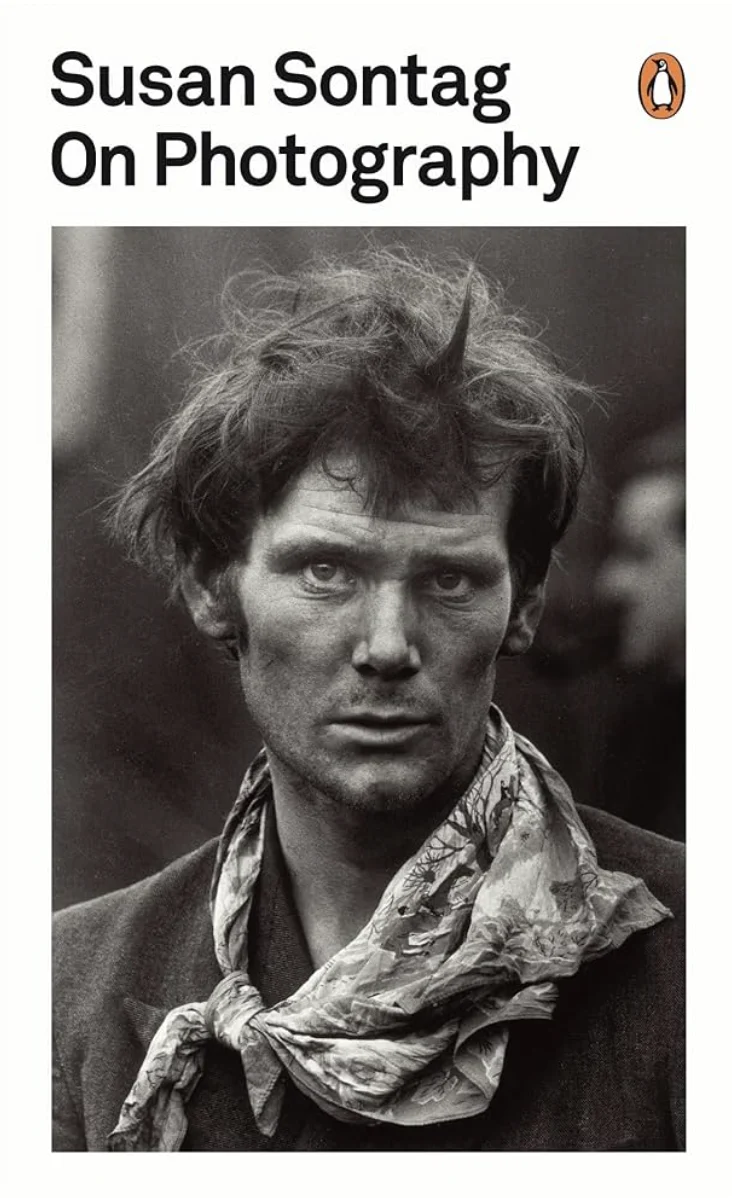
On Photography
Essays written for The New York Review of Books across the seventies, opening with 'In Plato's Cave.' Sontag argued that the camera changes the ethics of seeing: to photograph is to appropriate the thing photographed, and a world collected as images becomes something ownable. It won the National Book Critics Circle Award for criticism, and every argument about images since, from war photography to the feed in your pocket, has had to route through it.
No photograph appears anywhere in a book arguing about what photographs do, and readers expecting a history or a how-to are left with pure argument instead. That argument also refuses to build: six essays circle the same handful of claims and restate them rather than advancing, so the second half reads as a rerun of the first. Density compounds the frustration. One reader calls it “totally impenetrable,” another says it reads “like a bloody brick,” and a third states flatly it “lacks central thesis.” At least one reviewer goes further, calling it the “worst book about photography” she’s read. Sontag’s recurring comparison of the camera to a gun draws specific mockery as overwrought, and her treatment of Diane Arbus’s subjects strikes some readers as harsh toward people Sontag never met. Every argument here is built for a film-era economy of images that a phone-camera reader has to translate backward.
The case for it and the rest of the canon open with Pro.