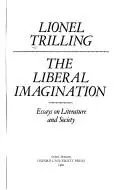
The Liberal Imagination
The most important American literary criticism collection of the postwar era. Trilling argued for the moral complexity of literature against political reductionism, and did it with a prose style of unusual clarity and depth.
Density is the standing complaint: sentences double back on themselves until the argument goes missing, and readers call the prose “dense, tangential and at times, even cryptic.” Two essays get named as the ones readers admit losing entirely, Reality in America and Art and Fortune, ironic since the Parrington takedown inside Reality in America is also the collection’s sharpest single argument. One reader complains Trilling deals in “abstract terms and barely emphasizes anything,” and another goes further: “no writing is seriously evaluated as writing,” since novels get sorted by how well they fit his thesis rather than judged as prose. The Freudian scaffolding hasn’t aged well either; one reader admits the book “falls for a few more Freudian fraudulences than I like.” The Kipling and Kinsey Report essays are the least-read pieces here, dated and easy to skip.
The case for it and the rest of the canon open with Pro.