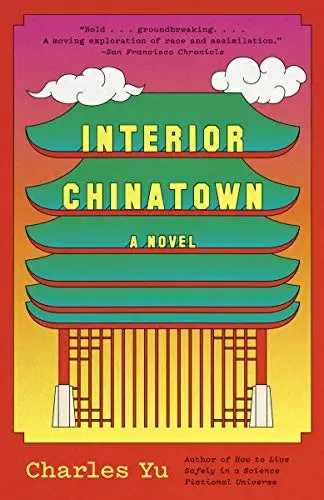
Interior Chinatown
Written as a TV screenplay, starring an Asian-American man trapped in the role of "Generic Asian Man." Yu's formally inventive novel about stereotyping, identity, and the grammar of representation won the 2020 National Book Award and changed how people talk about Asian-American experience.
Because a script page holds far less text than a prose page, the book reads to some critics as shorter than its count implies, an estimated hundred-odd pages of prose dressed in screenplay formatting. The satire repeats rather than trusts the reader; one detractor compares the whole thing to “the ultimate overlong Saturday Night Live sketch”, calling it “constantly dodging the metaphorical anvils being dropped on you”. The climactic courtroom scene draws the sharpest complaints, several reviewers saying it drops the earlier subtlety for a monologue spelling out themes already clear from what came before. Willis himself gets called underdrawn, defined by studious, respectful, positive-stereotype traits that one reviewer says makes him embody the very stereotype the book claims to critique. Even readers sympathetic to the ideas say the format became a real barrier; one admits “the courier type began to wear on me”.
The case for it and the rest of the canon open with Pro.