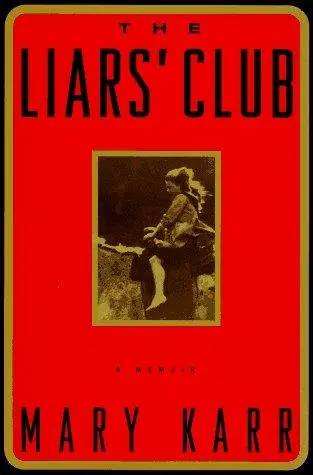
The Liar's Club
The book that broke the modern memoir wide open. Karr's account of a violent, brilliant, half-mad East Texas childhood reads like a novel and remembers like an indictment. Her voice — funny, profane, exact — became the template every American memoirist after 1995 had to reckon with.
Doubts about accuracy follow this book everywhere. A cluster of two-star readers flag mismatched details between editions and argue a child that age could not retain this much sensory detail, one reaching for the clinical term “pseudologia fantastica” to describe her suspicion. The jacket’s promise of comedy draws pushback too: some readers found the material simply sad, closer to something that “read like a Lifetime movie” than the wickedly funny book they were sold. Pacing thins around the seventy-page mark, where one reader says progress stalls so badly “it feels like I’m on page 1,000,073.” Others just never warm to Karr as narrator, the polish, one writes, “utterly lacked any richness of emotion” despite the visible skill.
The case for it and the rest of the canon open with Pro.