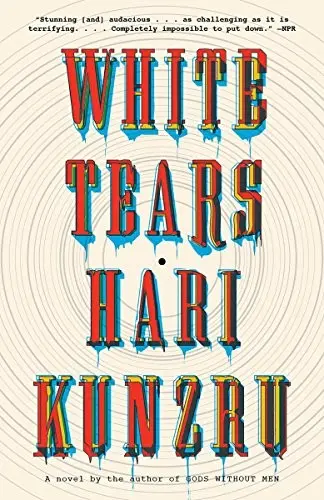
White Tears
Two white music obsessives record an old Black man singing on the street; a ghost story about cultural appropriation and historical violence erupts. Kunzru's novel does something formally strange with time and genre in service of a serious argument about who owns American music and who pays for it.
The novel splits roughly two-thirds and one-third: a grounded present-day story about friendship and record collecting, then a much faster, non-linear turn that a critic says leaves the book “staggered under the weight of its own ambitions”. One detailed critical review argues the audio-engineering detail reads as “spawned from countless MFA programs” rather than lived knowledge of the record-collecting world. A frustrated reader says “the author vomited random words onto the page” once the timelines start bleeding together. Others push harder on the racial politics, arguing that with Black interiority kept mostly offstage, “black suffering is still ornamental” however deliberate the erasure is meant to read.
The case for it and the rest of the canon open with Pro.