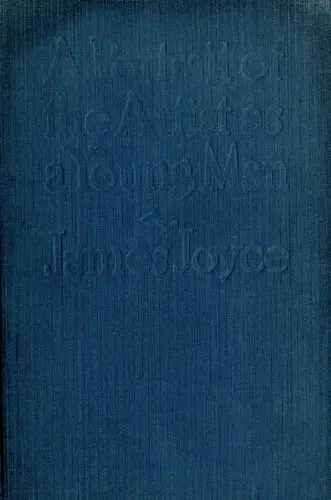
A Portrait of the Artist as a Young Man
Stephen Dedalus's journey from childhood religious terror to artistic vocation is the template for every subsequent novel about becoming a writer. Joyce established stream of consciousness as a literary technique here before perfecting it in Ulysses. Modern Library ranked it third.
The camera never leaves Stephen's head, and he is "such a pipsqueak" for long stretches, a boy whose sufferings are mostly theoretical. The late aesthetic-theory dialogue that admirers call the payoff reads elsewhere as "a youngster showing off," Aquinas recited at a friend for pages. Even the hell sermon gets skimmed by its own admirers once the tortures start repeating. The narration keeps "a strong distance between the reader and Stephen" while staying inside his skull, an odd combination that leaves people watching rather than caring, and his feelings toward women arrive "steeped in theory rather than brotherly affection." One reader's account of the plot: "things kept happening to him."
The case for it and the rest of the canon open with Pro.