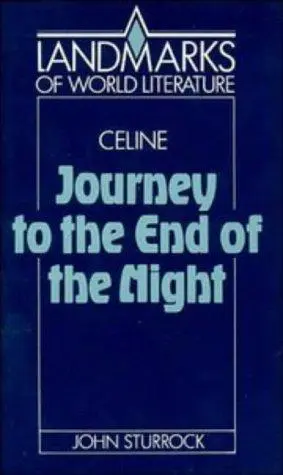
Journey to the End of the Night
A first-person picaresque through WWI, Africa, Detroit, and Paris that destroyed genteel French prose. Celine invented a raw, slangy, furious voice in 1932 that influenced Beckett, Miller, and Kerouac. Le Monde ranked it sixth. Morally appalling author; extraordinary novel.
Disgust arrives on page one and never modulates, "one long monotone, one endless screech" across four hundred and sixty pages, and readers who love the war chapters watch the Africa and medical stretches repeat them at lower voltage. "If Celine had shut his trap around the 300 page mark," one reader suggests. Bardamu drifts rather than acts, so the back half loses whatever shape the opening had. The philosophizing asides restate the same nihilism instead of developing it. And Celine's postwar antisemitic pamphlets are not a footnote readers can set aside; several describe the book as "an exercise in readerly self-flagellation" for that reason alone.
The case for it and the rest of the canon open with Pro.