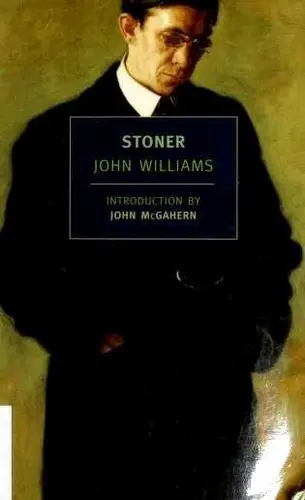
Stoner
Decide its fate
The record
Time
An eveningA season293 pages, about 6 hours: about the length of a typical book on the shelf.
Getting in
Walk right inSteep climbStoner, a Missouri farm boy, is sent to study agriculture until a Shakespeare class redirects him.
What it gives
Plot and actionIdeas to live byIn 15 reviews from critics and book blogs, none credit the plot and 7 credit the ideas or a change in how they live.
One of a kind
Others do thisNothing else doesA blog review likens Stoner to Willa Cather’s My Ántonia, on the shelf at 264 pages, for tracking one man’s adulthood in plain prose.
The case for it
on Stoner’s sympathy
“it is to Mr. Williams’ credit that he achieves for Stoner the sympathy he deserves”
Kirkus Reviews, 1965 on the Shakespeare class
“A spark is lit inside of him that will never go out.”
Gary Joshua Garrison · Hayden's Ferry Review, 2015 on his daughter’s estrangement
“I found the subplot about the estrangement of Stoner from his daughter deeply affecting”
a Substack review on the length
“Sixty or so years pass in under 300 pages”
Emily Hearn · The Boar, 2025
The case against
on Stoner’s passivity
“Stoner does nothing.”
one star · a book blog on Edith and Katherine
“Edith, the fantasy of martyrdom, and Katherine, the fantasy of sex”
a Substack review on Katherine Driscoll
“smart, quiet, pretty, in love with him, and ready to leave with minimal fuss”
Michelle E. Crouch · Cleaver Magazine, 2015 on the Lomax dispute
“the petty factional squabbles common to academia”
a book blog