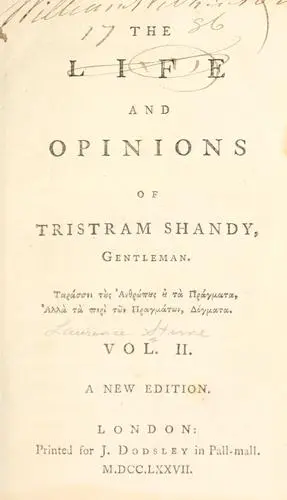
The Life and Opinions of Tristram Shandy, Gentleman
Sterne deconstructed the novel before the novel even existed as a stable form, in 1759. The narrator cannot tell his story in order. The digressions are the point. Blank pages, black pages, marbled pages serve as metafictional provocations. Borges, Calvino, David Foster Wallace: every postmodern novelist descends from Sterne.
Hundreds of pages in, Tristram has barely been born, and whole volumes cover a year or two of household business. I “kept hoping something would happen, but nothing ever does,” reports a reader who finished anyway. The structural objection cuts deeper: the book “doesn’t really have anything to move away from,” so the digressions depart from nothing. Sterne’s admirers get dismissed by one detractor as “flock-following, digression-loving, hobby-horse riding loonies” and the book itself as “vacuous thundergunk.” The wound-and-childbirth innuendo lands mild now. Scholarly editions add their own injury, footnotes stacked on footnotes, readers reporting “carpal tunnel from flicking back and forth.”
The case for it and the rest of the canon open with Pro.