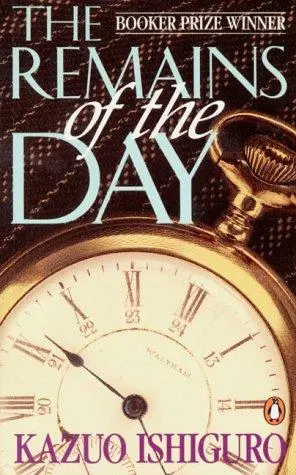
The Remains of the Day
Decide its fate
The record
Time
An eveningA season254 pages, about 5 hours: four-fifths the length of a typical book on the shelf.
Getting in
Walk right inSteep climbFour readers call the opening slow; three say they nearly gave up before the book won them over.
What it gives
Plot and actionIdeas to live byIn 12 reviews from critics and book blogs, none credit the plot and 6 credit the ideas or a change in how they live.
One of a kind
Others do thisNothing else doesIshiguro’s own Never Let Me Go, on the shelf at 319 pages, comes up in two reviews, one rating this book higher.
The case for it
on the comedy of manners
“a beguiling comedy of manners that evolves almost magically into a profound and heart-rending”
Lawrence Graver · The New York Times, 1989 on the idea of dignity
“When he speaks of ‘dignity,’ you realise he means repression.”
a Substack review on Miss Kenton and Stevens
“I loved the very, very reserved romance between Miss Kenton and Stevens.”
a book blog on the country drive
“now, however, I saw dear old Carson taking this journey along the English country roads.”
a book blog
The case against
on the self-censoring butler
“something doomed about Ishiguro’s effort to enlist sympathy for such a self-censoring stuffed shirt”
Kirkus Reviews, 1989 on the stiff-upper-lip manner
“I find the constant stiff-upper-lip shtick to be nothing but wearisome.”
three stars · a book blog on the novel’s length
“I think this would have made a better short story”
a book blog on Stevens’s character
“Stevens comes across as a cold and robotic narcissist.”
a book blog