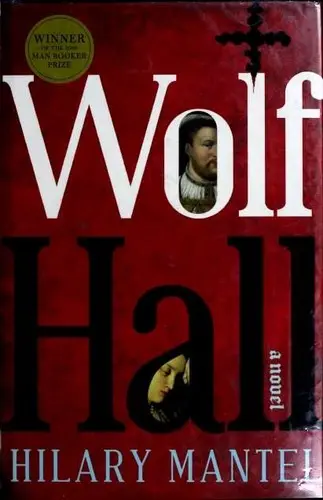
Wolf Hall
Decide its fate
The record
Time
An eveningA season653 pages, about 13 hours: the length of 2.0 typical books on the shelf.
Getting in
Walk right inSteep climbThree readers quit without finishing: one 150 pages in, and two at the halfway point.
One of a kind
Others do thisNothing else doesA commenter says War and Peace, on the shelf at 696 pages, does a better job addressing a historical subject.
The case for it
on Cromwell’s wit
“I loved Cromwell’s dry wit. He comes across as compassionate to his loved ones”
five stars · a book blog on Cromwell and Henry
“the story of Thomas Cromwell and Henry the XIII are genuinely interesting”
two stars · a book blog on the characters
“the characters do truly come to life on the page”
a book blog on their scenes together
“the scenes where they come to know one another are among the most electrifying”
a book blog
The case against
on the pronoun he
“Cromwell is usually called plain "he", even when it causes ambiguities”
Christopher Tayler · The Guardian, 2009 on Cromwell’s emotions
“The characters, including Cromwell, remain unknowable, their emotions closely guarded”
Kirkus Reviews, 2009 on the family trees
“a 560-page novel that offers at its outset two charts of family trees”
Joan Frank · San Francisco Chronicle, 2009 on the minor characters
“the various ambassadors, earls, clergymen etc all became a bit faceless for me”
a book blog