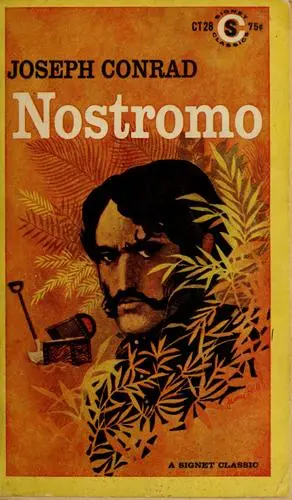
Nostromo
Conrad's most ambitious novel. A fictional South American republic, a silver mine, and the corruption of idealism by material interests. F.R. Leavis called it Conrad's greatest achievement. Published in 1904, its fragmented chronology and political pessimism anticipated everything the 20th century would learn about resource extraction and colonialism.
“There are no scenes! It’s just descriptions,” one reader protests, and another puts the same objection as “a shitload of talking and not very much doing.” The first hundred-odd pages are the wall, and readers commonly stall between page 85 and 150, finishing only on a second attempt. The title character is missing from long stretches of his own book. Conrad shifts narrator and timeline without warning across provinces no map accompanies, and he “consistently foreshadows events as if to purposely negate any dramatic tension.” Past four hundred pages, readers put it at “about 30% too many words.” The crude stereotyping of one minor character reads as ugly even to admirers.
The case for it and the rest of the canon open with Pro.