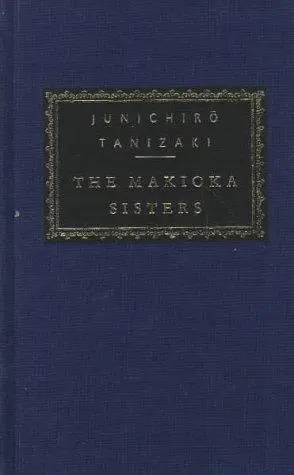
The Makioka Sisters
Japan's greatest domestic novel is, at its heart, a meditation on love and time. Four sisters in pre-war Osaka, trying to find husbands, their private longings. Tanizaki writes with breathtaking psychological subtlety; the love stories here are all the more powerful for being mostly unspoken.
The dominant complaint here is pace: readers describe long stretches worn down by Yukiko's repeated marriage interviews, which go nowhere for hundreds of pages before anything resolves. Yukiko herself splits opinion: one critic calls her “an annoying, wheedling milquetoast” rather than a heroine worth rooting for, her passive resistance reading as a flaw instead of a virtue. Readers expecting a war novel are left wanting; the historical backdrop stays offstage, and one notes plainly “there is very little talk of the war in the book” despite the late-1930s Osaka setting. The book runs on repeated domestic incident, letters, house moves, family squabbles, without much escalation, which some call sociology of a vanishing merchant class dressed as fiction. Even a critic who finished it stayed unresolved: “Even now, I'm not completely sure if I like this book.” Another calls it, not unfairly, “a juicy soap opera set in the upper classes.”
The case for it and the rest of the canon open with Pro.