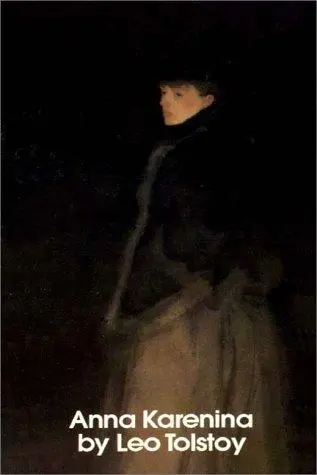
Anna Karenina
Decide its fate
The record
Time
An eveningA season838 pages, about 17 hours: the length of 2.6 typical books on the shelf.
Getting in
Walk right inSteep climbStiva’s household is in crisis over his affair with the governess, and Anna takes the train from Petersburg to Moscow.
One of a kind
Others do thisNothing else doesKirkus sets Anna in a line with Flaubert’s Emma Bovary; Madame Bovary sits on the shelf at 351 pages.
The case for it
on Stiva’s introduction
“The book opens with ‘Stiva,’ and who that has once made Stiva’s acquaintance will ever forget him? We are living, in Count Tolstoi’s novel, among the great people of Moscow and St. Petersburg, the nobles and the high functionaries, the governing class of Russia.”
Matthew Arnold · Essays in Criticism: Second Series, 1888 on Karenin and Stiva
“bloodless husband Karenin and ingenuous epicurean brother Stiva, among many others, are quite literally unforgettable.”
Kirkus Reviews, 2001 on the farming chapters
“His journey through farming, faith, and marriage to Kitty provides the grounded, earthy hope”
a Substack review on the secondary characters
“Anna and Vronsky almost take second place to Kitty and Levin and Dolly and Stiva.”
a book blog
The case against
on land management
“could have lived without the endless passages on methods of land management.”
five stars · a book blog on levin’s likability
“Levin is not a character who is easy to root for”
a Substack review on the length
“At 800 pages, simply holding Leo Tolstoy’s Anna Karenina in your hands can feel hard”
four stars · a Substack review on the character names
“the different variations of a person’s name all the time, even on the same sentence”
a Substack review