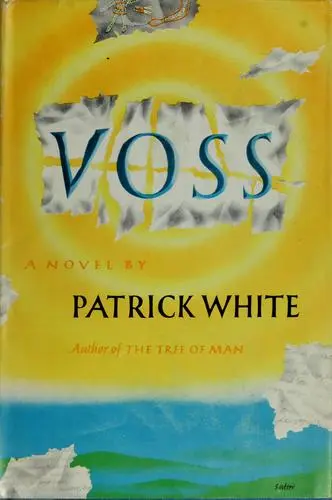
Voss
Nobel Prize-winning prose about a love story that exists largely as psychic communion. German explorer Voss and the colonial girl Laura Trevelyan are connected across hundreds of miles of Australian desert in an almost mystical bond. White's prose is dense and demanding; the love story is stranger and more powerful for it.
Voss himself is the problem for a lot of readers: arrogant, self-reliant to the point of coldness, and hundreds of pages inside his head make long stretches feel like a chore. The prose draws the same charge, dense to the point of impenetrable, with one reviewer dismissing the whole book as “overwrought and pretentious” and another calling it “too dry, full of unnecessary dialogue and forced profundity.” The plot barely holds together: a stolen compass gets returned without consequence, an engagement unravels without driving anything forward, and the expedition party splits only to arrive at the same place. Skeptics say the telepathic bond other readers praise is simply asserted rather than built on the page, and the publisher copy oversells it as a love story when the actual book runs colder and stranger. More than one reader admits “a struggle to get to the end,” finishing out of guilt rather than pleasure.
The case for it and the rest of the canon open with Pro.