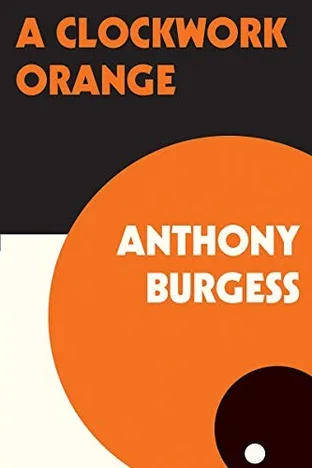
A Clockwork Orange
Anthony Burgess's 1962 novel is narrated by Alex, a teenage gang leader in a near-future Britain, who recounts his crimes in Nadsat, an invented slang blending English street talk with Russian loanwords. After a robbery ends in a killing, the state puts Alex through the Ludovico Technique, an aversion-conditioning program that removes his ability to choose violence, posing the book's central question of whether forced goodness has moral worth. American editions omitted Burgess's final chapter from 1963 to 1986, and Stanley Kubrick's 1971 film follows that shorter, darker text rather than the restored version now standard in print.
Two pages. That, one early reviewer warned, is all the goodwill the slang earns: "an argot that makes such demands on the reader that no one could care less after the first two pages." Readers have been bailing at the same spot ever since, glossary or no glossary: "The invented words were so annoying that I wanted to throw my Kindle out of the window." The violence is not even the sticking point, the prose is: every horror arrives in code, and the decoding falls on you. "What happens to Alex is terrible but it is worse for the reader," the same review concluded. Some readers route the blame past Alex entirely: "If you look up 'bitter' in the dictionary, you will find a picture of Anthony Burgess."
The case for it and the rest of the canon open with Pro.