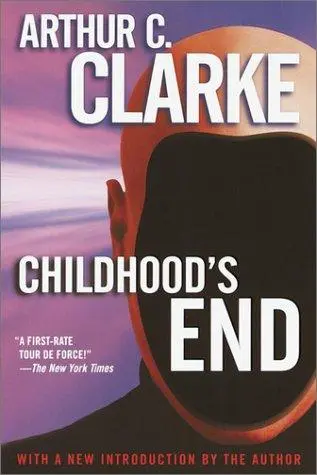
Childhood's End
The aliens arrive and bring utopia. But at what cost? Clarke's most profound novel uses the Overlords as a lens on humanity's relationship to transcendence and whether species-level evolution is worth the loss of individual identity.
The decades-jumping structure draws consistent pushback, one reader admitting “I remained largely clueless about where the story was heading.” The people are vehicles for the premise rather than individuals, and another says plainly “I didn’t relate to any of the characters.” The 1950s gender attitudes show, a critic noting Clarke “often uses ‘girls’ to refer to full-grown, adult women.” His dismissiveness toward religion irritates readers precisely because the book leans on psychic material played straight as plausible. And Part Two is where “This middle part of the story dragged a little” gets said independently across reviews.
The case for it and the rest of the canon open with Pro.