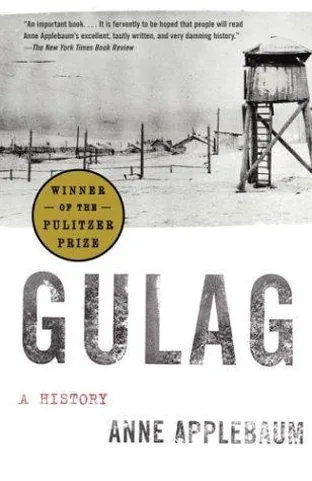
Gulag: A History
A full archival history of the Soviet forced-labor camp system, from its origins after the 1917 revolution through its peak under Stalin to its dismantling under Gorbachev, built from newly opened Soviet archives, survivor memoirs, and interviews. It won the 2004 Pulitzer Prize for General Nonfiction. Page count is the standard in-print Anchor Books paperback (April 2004, ISBN 9781400034093); the Doubleday hardcover runs 677 pages.
Seven hundred thirty six pages, and somewhere in the middle the gram-by-gram ration tables start to blur. "There is so much information you get drowned by the details and what is discussed is so very horrible," one reader writes; a blogger needed four months to finish. Part Two drops chronology for themes, so "it switched from years and camps with such rapidity" that you lose your place in the decade, never mind the argument. And for a documentary history the sourcing wobbles: "the author frequently referred to fictionalized accounts, such as Aleksandr Solzhenitsyn's books," which leaves you wondering where the archive ends and the literature begins. "There is only so much can be said in the end about this topic."
The case for it and the rest of the canon open with Pro.