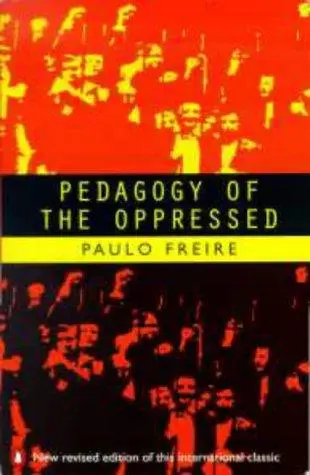
Pedagogy of the Oppressed
Freire argued that traditional education is "banking" (depositing facts into passive students, domesticating them for oppression). His alternative: education as a practice of freedom, critical consciousness, dialogue. The most cited education text in the world and the founding document of critical pedagogy.
The irony is the loudest complaint, that “a book about popular education should seem so willfully obtuse.” It is “mind-numbingly repetitive,” “an essay stretched into a book,” and readers give up with “I don't get this book...overacademic hard to read.” The oppressor-oppressed binary reads as too clean for anyone who occupies both roles by turns. When Freire finally reaches a concrete classroom example there is barely enough to picture it, and critics charge “he replaces education with a political indoctrination.” The uncritical invocations age worst: “only the optimistic heydays of the left could possibly talk up Castro and Guevara.” One ambivalent verdict: “kind of like the Beatles: I'm not really that into it, but where would we be today without its influence.”
The case for it and the rest of the canon open with Pro.