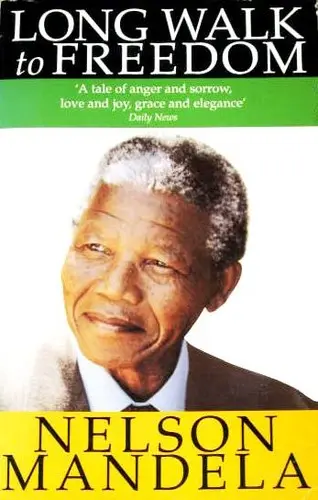
Long Walk to Freedom
Twenty-seven years in prison, and Mandela came out not broken but transformed, then became president. His autobiography is both a personal story of extraordinary endurance and a history of apartheid South Africa. Its moral centerpiece, the choice of reconciliation over revenge, may be the most important political lesson of the 20th century.
The length is the near-universal complaint: “the book is about 300 pages too long,” and it “could've benefited from having a stricter editor,” the middle stretch of party organizing and legal maneuvering where attention drifts. It runs “long and quite detailed (at times wordy).” The prose is plain to the point of dry, and the same restraint admirers praise reads to others as a book that “does not emphasize the personal or his emotions.” The childhood section, valued for context, is the slowest patch. And the ghostwriter's hand shows in the smoothing of the voice into standard political-memoir English, which a few say flattens what could have been more distinctive.
The case for it and the rest of the canon open with Pro.