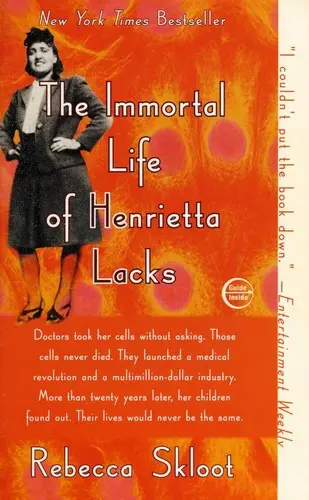
The Immortal Life of Henrietta Lacks
Skloot's account of how cancer cells taken from a poor Black woman in 1951 became an essential tool in medicine, without her knowledge or consent, raises profound questions about race, science, bioethics, and exploitation. It is simultaneously a scientific history, a family portrait, and a moral reckoning.
The most repeated complaint, independently on Goodreads and Reddit, is that “the author got in the way,” readers wanting more science and less of the reporting trip, until “much of Henrietta and the science is sidelined.” The “narrative started to fall apart at the end” as focus shifts toward Deborah's unravelling, and those late ride-along sections “kind of dragged and got repetitive,” with “some passages were stretched out too long.” Trying to be three books at once, “no particular biography satisfied as a main course.” And the weight of the subject stalls people before they start: “Not really in the mood. Might try again later.”
The case for it and the rest of the canon open with Pro.