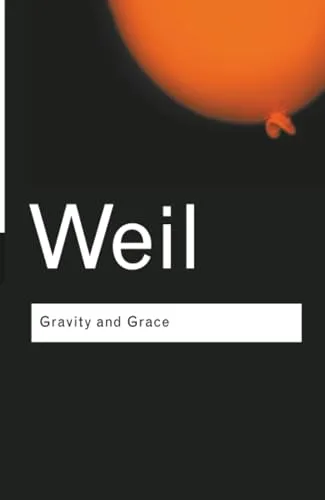
Gravity and Grace
Decide its fate
Attention, taken to its highest degree, is the same thing as prayer. That is the sentence readers copy out first, and it is the book's whole method in one line. Weil watches the machinery of the soul the way a physicist watches matter: everything falls, grasps at consolation, rushes to fill every void, and what she calls grace enters only where a person has stopped filling. Readers describe the fragments as being read by the book rather than reading it, and ration them one a morning for months. Camus, who edited her manuscripts for Gallimard, called her the only great spirit of our times, and the notebooks behind this book are the reason. It does not argue you into anything; it names what you were already doing in the dark.
This is not a book Weil wrote. Thibon chose the fragments and ordered them under his own headings, and readers who go on to the full Notebooks accuse him of bending an unruly mystic into orthodox Catholic shape. What survives the selection gives you nothing to push against: gnomic sentences without argument or context, so a line that lands wrong has no surrounding chapter to correct it. The ideal she calls decreation, the unmaking of the self so grace can pass through, sits uncomfortably close to the self-starvation that helped kill her, and some readers cannot separate the doctrine from the illness. The disdain for the body recurs, the swipes at Judaism recur, and admirers of her concrete book about work and rootedness find this one all altitude and no ground.