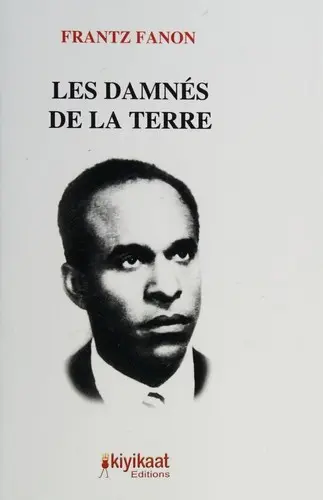
The Wretched of the Earth
Decide its fate
The record
Time
An eveningA season251 pages, about 5 hours: four-fifths the length of a typical book on the shelf.
Getting in
Walk right inSteep climbSartre’s preface comes first, then Fanon’s chapter On Violence, which argues that decolonization is always a violent phenomenon.
What it gives
Plot and actionIdeas to live byIn 12 reviews from critics and book blogs, none credit the plot and 10 credit the ideas or a change in how they live.
One of a kind
Others do thisNothing else doesOne essay sets it beside Edward Said’s Orientalism, on the shelf at 398 pages, another beside Paulo Freire’s Pedagogy of the Oppressed, at 186.
The case for it
on the violence argument
“extraordinarily important because he’s talking about the necessity of violence to assert one’s dignity”
Xavier Le Clerc · Five Books, 2024 on the post-independence leaders
“His searing critique of post-independence leaders who failed their countries is often ignored.”
a Substack review on the colonized psyche
“Fanon creates a striking portrait of the colonised people’s lack of regard for themselves”
Flor Guzzanti · ROCK & ART, 2023 on the double lens
“Fanon’s dual perspective, as both a Marxist and a psychoanalyst, allows him to analyze colonization”
a Substack review
The case against
on the male perspective
“His relentlessly male perspective reduced liberation from colonialism to the frustrations and desires of men”
Pankaj Mishra · The New Yorker, 2021 on the case for violence
“his valorization of, violence as the only means of liberation from oppression”
Janet Cherry · Journal of Resistance Studies, 2015 on the rushed composition
“portions of the work are incomplete and much of it is recycled from other works”
a book blog on the heft
“Fanon’s massive tome of political theory”
Anjuli Fatima Raza Kolb · Five Books, 2021