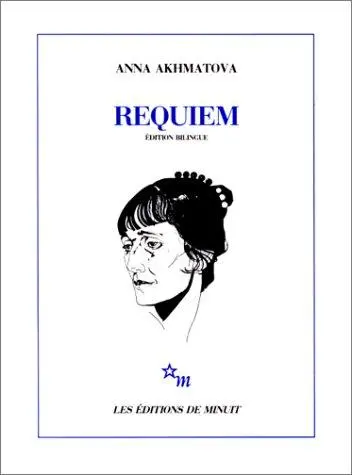
Requiem
Composed in secret during the Stalinist Terror (Akhmatova memorized the poems and burned the paper) while her son was repeatedly arrested. Requiem documents the experience of the women who stood in prison lines for months and years waiting for news of their disappeared husbands and sons. Its combination of personal grief, historical witness, and formal control makes it the great poem of totalitarian suffering. It was one of the most dangerous things ever written.
Requiem asks a lot of context most readers don't bring: without notes on Stalin's Great Terror and the arrest of Akhmatova's son, the grief lands abstract rather than specific. Translation is where the real friction sits. One French-reading reviewer calls her edition's phrasing “très frustrée de cette traduction, misogyne à mes yeux,” while admitting she couldn't check it against the Russian, and a critic notes English versions have “mostly abandoned the rhymes” that carried the original's music. At least one reader ranks it “by far my least favourite” of Akhmatova's work. Editions that bundle Requiem with her autobiographical prose draw complaints that the prose crowds out the poetry readers came for, and editions pairing it with the denser Poem Without a Hero disappoint readers expecting the whole volume to move as directly as Requiem does.
The case for it and the rest of the canon open with Pro.