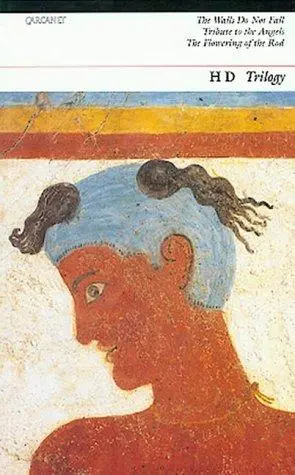
Trilogy
H.D.'s wartime masterwork, written in London during the Blitz, weaves Egyptian mythology, Christian mysticism, and feminist vision into a poem of survival and renewal. Long overshadowed by Pound (who named her "H.D., Imagiste") and by her gender, the Trilogy is now recognized as one of the great sustained poems of the century: a woman writing a new mythology in the rubble of Western civilization.
Trilogy asks a reader to already own the classical and biblical grammar it speaks in, and when that grammar isn't there, one reader says it felt like they had “walked in the middle of a mystery cult ceremony.” Even sympathetic readers admit they have “no idea what she's saying half the time,” especially in The Walls Do Not Fall, the entry point several say lacks the single anchoring crisis that carries The Waste Land or Song of Myself. The New Directions edition supplies Reader's Notes, but one detailed review found the apparatus explains only what's being referenced, pulling attention out of the poem rather than into it. Another reader sums up the barrier flatly: allusions that once were common ground “are now Greek to everyone.”
The case for it and the rest of the canon open with Pro.