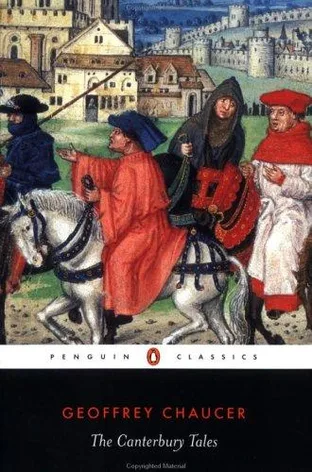
The Canterbury Tales
Some thirty pilgrims ride from the Tabard Inn in Southwark toward Thomas Becket's shrine at Canterbury, trading stories along the way in a contest whose prize is a free dinner paid for by the losers. Chaucer planned around 120 tales but had completed 24 at his death in 1400, spanning chivalric romance, beast fable, bawdy farce, and prose sermon, most in verse. The work is unfinished: the pilgrims never make the return trip, and the text closes with Chaucer's retraction of his "worldly vanitees."
A storytelling contest, thirty pilgrims, a free dinner riding on it: except nobody on the road actually argues. The tellers are "floating heads," one reviewer complains, taking turns instead of talking to each other. And the turns repeat: "multiple cuck stories and one extended fart joke," stretched over 504 pages. When the raunch finally stops, it stops for the Tale of Melibee and the Parson's closing sermon, "the stuffiest, most pedantic piety imaginable." The editions offer no exit: one purist calls Raffel's modern version "not only the worst translation of Chaucer, but the worst translation of anything ever written," while the Middle English original is a wall of its own. And the Prioress's Tale is a blood-libel legend, a problem no footnote resolves.
The case for it and the rest of the canon open with Pro.