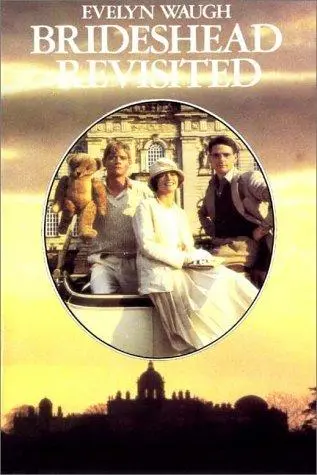
Brideshead Revisited
Waugh's most serious novel, published in 1945. A memory of Oxford, aristocratic beauty, and Catholicism, told from the wreckage of WWII. Charles Ryder's love for Sebastian Flyte and Julia is also a love for a world that no longer exists. The prose is pure and melancholy. The novel argues, controversially, that grace is irresistible.
Charles watches. For four hundred pages he observes the Flytes without ever quite participating, and readers report never connecting to a narrator whose "writing is so dry and on the surface." The structure compounds it, since the book reads as "two totally separate, virtually unrelated books," the Oxford idyll and then a Catholic argument that Edmund Wilson said was "more appropriate to a sermon than to a work of art." The class snobbery surfaces when Charles privately dismisses a fellow officer as the coming lesser world. A critic's summary of the lush passages still stings: "your main reaction is still: oh puh-lease." One reader calls the whole "a nice pond I mistook for a great lake."
The case for it and the rest of the canon open with Pro.