Alan Turing: The Enigma
Decide its fate
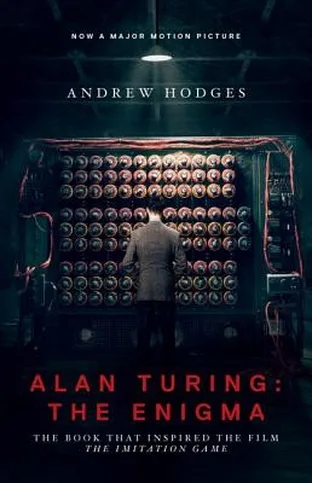
Come in from the film expecting a codebreaking procedural and you get the whole life: the schoolboy grief for Christopher Morcom that shapes everything after, the postwar work on biology, the arrest and chemical castration that left readers in tears. Hodges is a working mathematician, and the math chapters readers dreaded become the reward: the universal machine and computable numbers explained more clearly than anywhere else, "unlike Dyson's muddled and waffly Turing's Cathedral." Active in gay liberation himself, he draws a Turing more sociable and self-assured than the movie's lonely genius. "An almost perfect match of biographer and subject," one critic writes. The codebreaking shortened the war by an estimated two years and saved millions; one admirer ranks this "better even than Kanigel on Ramanujan and Issacson on Einstein."
Red and White Queens drift through the chapters, von Neumann plays the Wizard, and the "extended mixed metaphor intertwining Alice in Wonderland," one reader says, never lets up across 768 pages. When the cryptanalysis arrives, the whimsy flips into notation: it "read almost like a Further Maths textbook at times," assuming math a general reader does not have. Boarding-school politics get chapters, and still Turing ends the book no more resolved than he began it, the documentation crowding out the man. Then the confident suicide verdict, argued from a running habit, a novel, and a half-eaten apple, when the book itself describes a home chemistry setup that could explain an accident. "He totally offed himself because a book told him to," a detractor jabs. "Less would have been more."