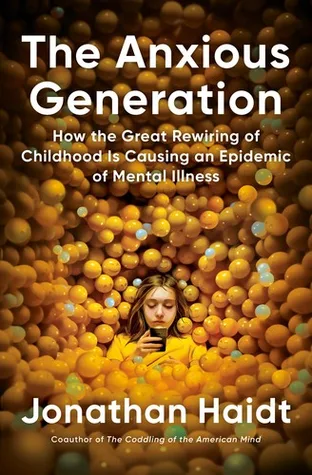
The Anxious Generation: How the Great Rewiring of Childhood Is Causing an Epidemic of Mental Illness
Decide its fate
One reader watched the thesis play out in her own family: a nephew parked in front of unsupervised YouTube as a toddler, a niece limited to Daniel Tiger once a week, and "a distinct and immediately noticeable difference between him and my niece." The book explains why: free play trains curiosity, a phone-based childhood trains threat-scanning, and the teen depression curves since 2012 follow. Even a reader who fights the parenting chapters concedes the core claim: "it is causative. I think the author demonstrates this beyond doubt." Another calls the book "the inevitable endpoint of research and knowledge that started in 2010," the numbers The Shallows and Stolen Focus never had. And the no-social-media-before-16 rule is already law in Australia, where "Three-quarters of the populace supports the ban."
Personal stories do the persuading here, and that is the problem: "anecdata (not real qualitative data) mixed with quantitative data," writes one reviewer, who would reject it, she says, if it crossed her desk as a science paper. An outside fact-check counted the citations: two thirds of the 476 studies predate 2010, and "only 22 of them have data on heavy social media use or mental health: none have both." When the published record runs out, the book cites itself, "citing Haidt's own Substack, analyses that Haidt says he ran but never published," while the errata page he promised sits nearly empty. The parenting fixes assume money and a safe suburb besides, since "not everyone's 12 year old can just hail a cab."