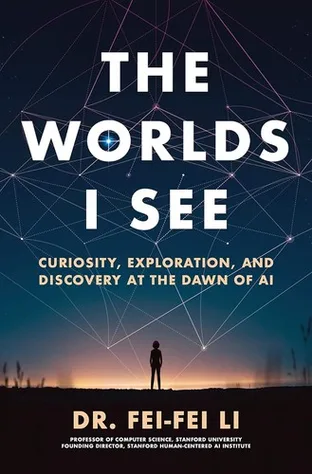
The Worlds I See: Curiosity, Exploration, and Discovery at the Dawn of AI
Decide its fate
A teenager fresh from Chengdu does her math homework on a garage-sale calculator. "Her calculator that her dad got at a garage sale, and her math teacher finally figured out the TAN key didn’t work!" one reader writes, and that teacher matters more than any algorithm: his family lent her parents $80,000 to open the dry-cleaning shop she worked weekends through Princeton. Admirers keep returning to her mother, gravely ill over the mending business, still asking "But is this what you want?" whenever a safer career beckoned. The ImageNet chapters hold up their end: the science is "described at a level where it caters to those already conversant with the field, as also those with an interest but no first-hand knowledge, and that is not easy to do."
The subtitle promises the dawn of AI. The technology stops around 2019: "Does not include information about newer AI tools, just the pre 2019 history," one reader reports, so anyone arriving from the chatbot era finds the field has already left it behind. That throws the whole weight on the memoir, and a detractor doubts it holds: "neither these discoveries nor her personal life story, her emigration from China to the USA, have the salience to justify an entire memoir." The prose is "technical detail, professional jargon, and personal anecdotes, conveyed with a distance that muffles their impact," one critic writes (a digression explains how ATMs read handwritten checks), and the reconstructed dialogue rings false enough that another reviewer smells a hired pen: "so clearly ghost written it’s almost offensive."