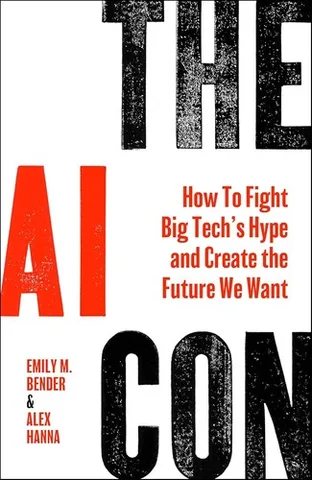
The AI Con: How to Fight Big Tech's Hype and Create the Future We Want
Decide its fate
Start with the screenwriters: a studio pitches AI-drafted scripts, then calls the writers back to 'edit' at an editor's rate what is actually a full rewrite. "The word ‘scam’ comes to mind," one reader says, and that pay trick is the argument in miniature: the hype works by renaming labor so it can be paid less. The deepest chapter is pure linguistics, on why a fluent chatbot fools us when an AI image doesn't: understanding needs a live mind on the other end, "That's why you can't teach your baby Italian via TV." Another reader would "recommend the first chapter for a great description and discussion of what 'AI' actually is"; an admirer calls the book a "self-help manual for the AI sceptic," usable at work the same week.
The jokes keep overruling the facts. One detractor names the method "ridicule as praxis" and catalogs what it costs: two nearby passages take opposite sides on whether AI threatens jobs, the book parks automobile tycoons at the start of the Industrial Revolution (the wrong century), and swaps two different textile machines for each other (one spins, one weaves). The technical picture was stale on arrival, "no mention of Chain-of-Thought reasoning, no mention of RAG," and when decades of documented chess progress come up, the authors change the subject, a move one chess-minded reviewer files under "simple flat-out denialism." Even a reader who came wanting the strongest version of the critique quit partway, finding the tone "so condescending and patronizing that I couldn’t take it seriously."