The Reverse Centaur's Guide to Life After AI
Decide its fate
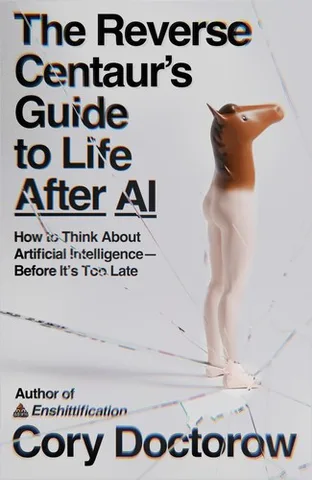
Start with the radiologist, whose job is no longer reading the scan but, in one reader's words, "to take the blame for the AI's mistakes." That is Doctorow's reverse centaur: not a worker steering a tool but a human "charged with confirming the judgments the AIs make at a superhuman clip," the delivery driver timed by an algorithm, the programmer fixing machine output all day. The book stays funny about all this because Doctorow treats the industry's prophets as hucksters, "makes them out to be charlatans," and the dread deflates with them. One admirer, recognizing their own working conditions on the page: "I love reading Cory Doctorow. I hate reading Cory Doctorow."
Decades of flaying the tech industry, and this is the book Cory Doctorow brings to the AI fight: one so oddly gentle that a detractor wonders whether somebody "forced him to write this complacent book under torture." The comfort on offer is a prediction, not a fact: the bubble pops, the money dries up, and the worst uses die off because "AI companies won't be trying to entice investors anymore." Another critic answers that "the jobs are going away permanently," bubble or no bubble, which turns the book's reassurance into wishful thinking for anyone whose work is already gone. Diagnosis everywhere, prescriptions nowhere: if you have no union and no bargaining power, even an admiring reviewer was left asking, "what am I to do with this?"