The Coming Wave: Technology, Power, and the 21st Century's Greatest Dilemma
Decide its fate
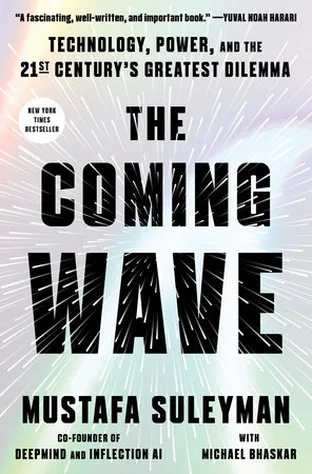
Start with the mechanism, because it explains everything else: no lab or nation can afford to slow down first, so none will. "It's a NUCLEAR ARMS RACE inside a GOLD RUSH," one reader writes, and the rest of the book follows from that sentence. The credibility comes from the source, a co-founder of DeepMind sounding the alarm on his own field, "a clear warning from someone whose voice cannot be ignored," one critic says. That vantage buys detail, like the fact readers keep repeating from the synthetic biology chapters: "one can buy a benchtop DNA synthesiser for $25k," which moves that capability from national labs to a consumer purchase. "If you want to sleep well at night, don't read this book," warns another.
Somewhere around the third potted history (steam engine, power loom, printing press) you realize you have read all of this in a decent newspaper already. "This is the typical example of a book that should have been an essay," one reader says; another does the arithmetic: "it could have been a really good 90-100 page book instead of 400 pages." The argument will not sit still either: chapters build the case that containment is impossible, then chapter 14 lists ten containment ideas and concedes they may not be feasible, "he can't make up his mind." And try checking a claim (3D printed houses, AI drug pipelines): no references, so "the only way to distinguish between ambit claim and documented fact is via prior knowledge."