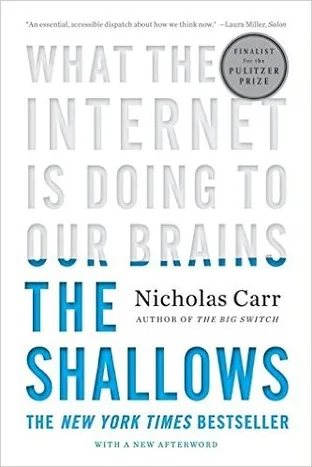
The Shallows: What the Internet Is Doing to Our Brains
Decide its fate
"Do you step into your room just to forget why you're there?" one reader asks, repeating the book's opening diagnostic, and the recognition is the hook: you already have the symptoms before Carr shows you the mechanism. The mechanism is the good part. Volunteers who merely imagined practicing piano for five days "exhibited precisely the same changes in their brains" as the ones who touched keys, which is why the skimming you do all day counts as training. A second study found "hyperlinks make text harder to understand, not easier": every link is a tiny decision, and the decisions add up. "The big guns come out in chapter 7, The Juggler's Brain," another reviewer writes, where distraction stops being an accident of the net and becomes its design.
An Atlantic essay in 2008, and it should have stayed one: the book "would've made a nice, light essay," one reader writes, since each chapter restates the point the last one made. Worse, the form enacts the disease. Clock, map, telegraph, typewriter, digression after digression, until it feels like "reading over the shoulder of somebody who's on Wikipedia": the exact fragmented habit Carr warns against, performed at book length. Test the evidence against anything you know firsthand and it wobbles; the claim that unspaced medieval text forced deeper reading collapses on Japanese (no spaces, free word order, fluent readers), which one reviewer calls "twisting the facts to fit his hypothesis." As for the idea that the net rewires us unlike any absorbing habit before it: "I call bullshit."