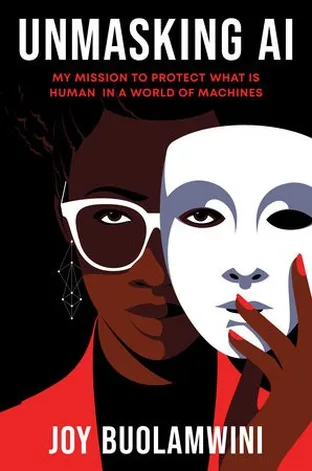
Unmasking AI: My Mission to Protect What Is Human in a World of Machines
Decide its fate
The software at the MIT Media Lab will not register a graduate student's face until she puts on a white mask: "Coding in whiteface was the last thing I expected to do when I came to MIT." That mask becomes Gender Shades, the peer-reviewed study clocking error rates near 35 percent for darker-skinned women against under 1 percent for lighter-skinned men, then a public fight where one reader says she has "taken on Amazon and eventually won." Poems open each part without crowding the science. By the epilogue an admirer writes, "we're in a closed-room roundtable with POTUS and he just asked for advice!?!?!?" A reader in AI since 1997: "Stop reading Elon Musk's biography or OpenAI tweets, because this book is your new North Star for AI."
Come for the AI and you get a memoir, come for the memoir and you get a timeline: "then this happened, then that happened…" as one reader puts it. Readers who already knew the TED talk and the Coded Bias documentary got nothing the press cycle hadn't given them. "Did I learn anything I wouldn't have gotten from a much shorter news article about the dangers of AI? No." Another reader: "Dry. Reads more like self promotion sprinkled with interesting facts on the current state of AI." Even a sympathetic reader squirms at the Olay beauty-campaign chapter arriving inside a book about how corporations co-opt their critics. And "This memoir ends when she defends her PhD thesis," closing the window just as the subject started moving fastest.