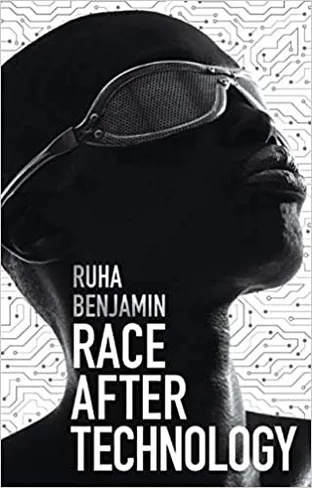
Race After Technology: Abolitionist Tools for the New Jim Code
Decide its fate
Hold your hand under the sensor and nothing happens: one reader points to "a soap dispenser that simply wouldn’t recognise non-white hands" as the moment tech bias stops being an abstraction. Benjamin supplies the history behind that sensor. Film stock was calibrated to white skin for decades, and the industry corrected it only when manufacturers complained the flaw was "hurting their business because it wasn’t able to clearly depict detail in chocolate or wood grain." An engineer building Siri's dialect support asks about African American English and is told, "Well, Apple products are for the premium market." No villain anywhere, just defaults sold as neutral: the machinery her New Jim Code names. The case studies compound rather than front-load, and "the book gains more steam toward the end."
Anyone arriving from Noble's Algorithms of Oppression or Eubanks' Automating Inequality will recognize nearly every example here: "Mostly pretty derivative of the work of other scholars," one detractor writes, down to a title borrowed from Michelle Alexander. The thesis has a hole too. If biased algorithms grow out of America's Jim Crow history, the same reviewer asks, "how come it is just as bad or worse in China," where there was no Jim Crow to inherit. The prose is pitched at her academic peers, not the newcomer the subject deserves. "The introduction was a quarter of the book," another reader estimates, and the chapters after it read as separate essays that end abruptly, examples crammed too close together to absorb. One reviewer: "Sometimes novel, and other times, insufferable."