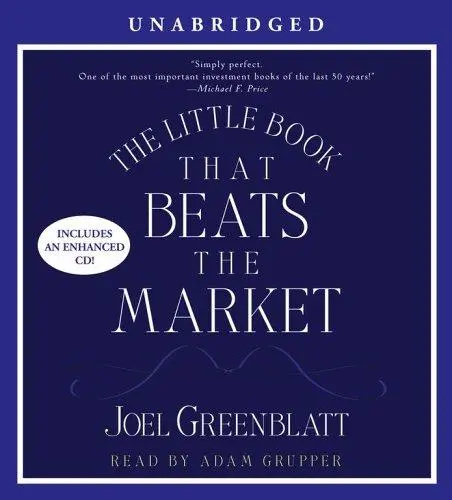
The Little Book That Beats the Market
Greenblatt distills value investing into the 'Magic Formula': rank by earnings yield and return on capital, buy the top-ranked, hold for a year, repeat. Simple enough for a child to follow, yet it historically outperformed the S&P 500 by a wide margin. The reason it works is the reason most people won't follow it: it requires patience during the inevitable stretches when it underperforms.
The idea itself fits on a page or two, and reviewers say the book pads out to length by restating the same phrase and rerunning the same example, calling it “essentially a value investing white paper stretched to book-length.” A 2010 follow-up added a new introduction arguing the formula stayed relevant, without fresh backtested data to back that up. Skeptics distrust the original backtest itself, comparing it to a target where “every shot is a bulls eye if you draw the circles” after the arrow lands. The more concrete practical worry: run mechanically, the formula keeps surfacing stocks that are statistically cheap because something is wrong with the business, and a critic notes plainly that “cheap, high return stocks are often cheap for a reason.” The clean backtest also skips trading costs, taxes, and the discipline of holding out-of-favor names through drawdowns.
The case for it and the rest of the canon open with Pro.