Tartuffe
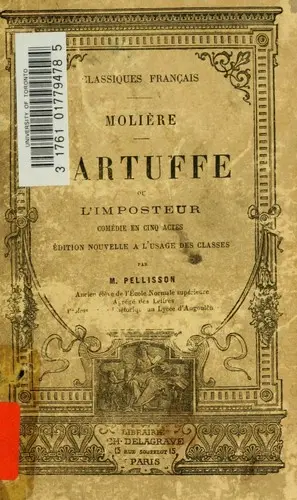
A religious hypocrite worms his way into a wealthy household and nearly destroys it. Louis XIV loved it. The Church banned it for five years. Moliere fought to get it staged, and the character's name became a synonym for sanctimonious fraud in every European language.
The ending resolves by royal decree out of nowhere, and that deus-ex-machina rescue is one of the most repeated complaints among unhappy readers, one flatly writing, “really hate deus ex machina.” Orgon's blindness gets pushed so far past belief that some readers call him “the most useless fictional male i have ever encountered” rather than sympathetic. A weak translation compounds the problem: readers who grab the Slater edition report the verse reading “sing-song and trite,” with at least one abandoning it mid-book to switch to Wilbur just to salvage the experience. Others flag real misogyny in how the female characters get bargained over, one reader calling the whole thing “Good fun, but with way more misogyny,” and several say the wit that plays so well on stage feels inert and workmanlike sitting cold on the page.
The case for it and the rest of the canon open with Pro.