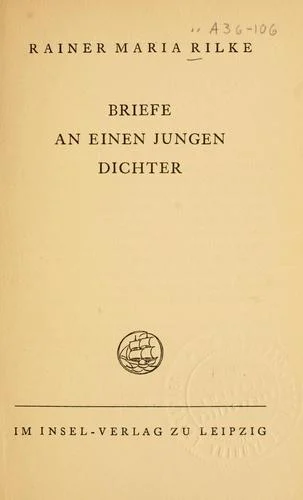
Letters to a Young Poet
Ten letters, 1903 to 1908, from Rilke to Franz Xaver Kappus, a nineteen-year-old military cadet who wrote to ask whether his poems were any good. Rilke never quite answers; instead: go into yourself, love your solitude, be patient with everything unsolved. Kappus published the letters in 1929, three years after Rilke's death. It has been pressed into more young hands than any book of its kind, and the fourth letter's 'live the questions' may be the most useful advice a stranger ever mailed to another.
The same intimacy curdles for other readers into something closer to self-pity: one calls Rilke “the biggest whiner to ever have walked the earth,” another reaches for “smug, priggish, pompous, self-absorbed, sentimental.” The prose itself draws fire as “purple prose and lofty, sentimental, patronizing clichés” rather than earned wisdom. A recurring complaint is the gap between the advice and the life: Rilke left his wife and infant daughter to live apart while dispensing counsel on bearing hardship, which plenty of readers read as plain hypocrisy. Because most editions print only his side of the exchange, the young poet he's supposedly answering disappears into a prop. Even sympathetic readers concede the effect depends on wanting to be moved, warning that “read with critical intent, the magic will be lost.”
The case for it and the rest of the canon open with Pro.