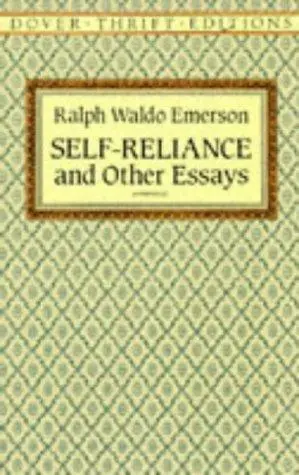
Self-Reliance and Other Essays
Emerson made the essay into an American form: prophetic, expansive, intoxicated with possibility. "Self-Reliance," "The Over-Soul," "Circles." These are the headwaters of American intellectual life. Every American essayist since is either following him or arguing with him.
Emerson's celebration of the self draws real pushback: his cold stance on charity and the poor undercuts the philosophy for readers who notice it, and more than one dismisses the whole project as “nebulous claims to self-importance.” His rejection of logical consistency strikes skeptics as self-defeating rather than liberating, since it discards the standard by which any argument gets judged; one reader calls it a “denouncement of logic, which, after all, is the very keystone of philosophy.” Others just find the prose exhausting, “overly-flowery, pretentious, rambling, and disorganized,” or accuse the whole thing of tipping into self-worship, “a paean to the self as god.” Beyond the title essay, pieces like History and The Over-Soul draw comparatively little reader engagement.
The case for it and the rest of the canon open with Pro.