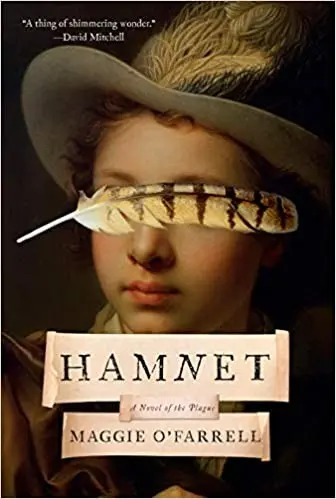
Hamnet
The death of Shakespeare's son as experienced by his wife Agnes. O'Farrell writes grief, plague, and marriage in Elizabethan England with such physical immediacy that the novel feels like it was written this morning. The best historical novel of the decade, and it earns the word "devastating" without melodrama.
The density is the complaint readers name most: triple-stacked adjectives and similes on nearly every page, a pattern one review says becomes impossible to unsee once you notice it. “When one word would suffice, twelve will be used,” another writes, and a cluster of readers say the same ornate sensory writing creates distance instead of intimacy, watching characters from outside even during the biggest scenes. Agnes draws a sharper charge: near-precognition, at home in the woods, read by some as a predictable shorthand rather than earned character work, with one reviewer summing her up as “the ultimate ‘not like other girls’ girl, woman, Other.” The plague-flea chapter that wins some readers over is the exact one others call a tonal detour and unnecessary padding. A recurring pacing complaint targets the middle stretch, with more than one reader admitting to spending “pages and pages wishing the book would just end already.”
The case for it and the rest of the canon open with Pro.