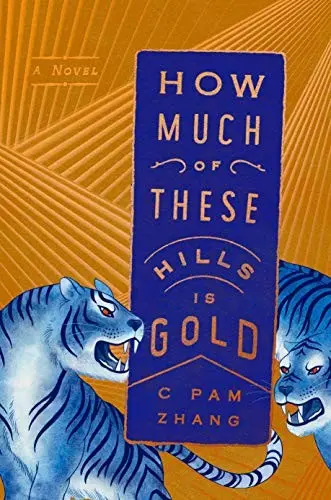
How Much of These Hills Is Gold
Two Chinese-American children in the Gold Rush West, carrying their dead father across a mythologized American terrain. Zhang reinvents the Western and writes about belonging, grief, and erasure in prose that reads like a new mythology being made in real time.
Zhang's prose draws real fire for being overwrought and self-conscious, forced metaphors and stripped-out pronouns that read to some as mannered rather than musical; one reviewer calls it flatly “writing-school writing”, another says, “The writing is mannered and calls attention to itself.” The four-part structure, present then backward through the father's death then further into the parents' own arrivals, disorients readers who describe the flashbacks working against the story. Untranslated Mandarin phrases send some readers to a translation app mid-page, and a sharper complaint argues the choice is historically off, since Chinese immigrants working that region likely spoke Cantonese instead. Physical plausibility gripes recur too, children carrying more weight than seems possible. At least one reviewer separates ordinary bleakness from the grim pile-up, arguing “there's bleak, and then there's misery porn”.
The case for it and the rest of the canon open with Pro.