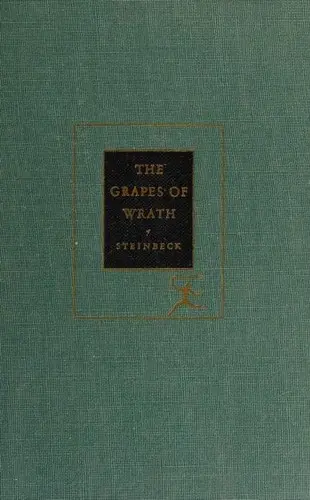
The Grapes of Wrath
Decide its fate
The record
Time
An eveningA season544 pages, about 11 hours: the length of 1.7 typical books on the shelf.
Getting in
Walk right inSteep climbTwo Amazon reviewers, quoted on a book blog, report stalling at chapter three, the turtle crossing a road.
What it gives
Plot and actionIdeas to live byIn 12 reviews from critics and book blogs, 2 credit the plot and 6 credit the ideas or a change in how they live.
One of a kind
Others do thisNothing else doesA critic calls Native Son, on the shelf at 399 pages against 544, a much better novel on the same theme.
The case for it
on Ma Joad
“Ma, the family thermometer and cornerstone”
a book blog on the descriptive writing
“flash after flash of unforgettable pictures, sharply etched with that restraint and power of pen”
Unsigned review · Kirkus Reviews, 1939 on the interchapters
“These chapters offer a particularly eloquent commentary on what is happening”
five stars · a book blog on the windstorm and floods
“The windstorm at the beginning and the floods at the end are incredibly well written”
a book blog
The case against
on the turtle chapter
“I could barely get past a whole chapter about a turtle crossing a road”
one star · a book blog on the secondary Joads
“I was considerably annoyed with Al, Ruthie, that awful bastard Connie”
a book blog on the missing speech marks
“the absence of speech marks when characters spoke”
Niamh Smith · The Founder, 2019 on the political message
“the book seems to be a well-written piece of propaganda”
Patrick T. Reardon · patricktreardon.com, 2019