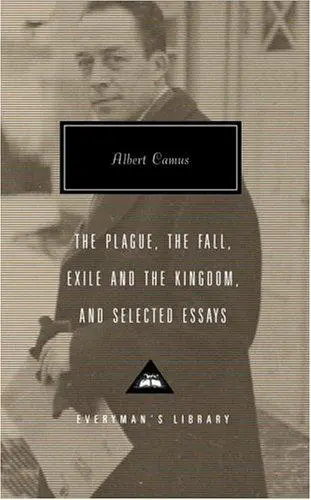
The Plague
Decide its fate
The record
Time
An eveningA season352 pages, about 7 hours: about the length of a typical book on the shelf.
Getting in
Walk right inSteep climbOne reader reports failed attempts to start the book; a second calls its opening disorienting.
One of a kind
Others do thisNothing else doesA blog reviewer recommends The Stranger, on the shelf at 178 pages, as background reading first.
The case for it
on the plague’s meaning
“each one of us carries within us the plague of injustice, of inhumanity”
Unsigned review · Kirkus Reviews, 1948 on Tarrou’s speech
“The most memorable part of the book for me was Tarrou’s speech to Rieux”
four stars · a book blog on Rieux’s heroism
“Rieux and his companions repeatedly display a subtle heroism born of method and duty.”
a book blog on the pandemic experience
“How well Camus succeeds at capturing the feel of this nearly unimaginable experience”
Margaret Betz · The Philosophers' Magazine, 2020
The case against
on the narration
“the cold, almost clinically detailed way in which it was written”
four stars · a book blog on Arab characters
“Though the novel is set in Algeria, there are no Arabs in it.”
Marina Warner · The Guardian, 2003 on the sentences
“Some of the sentences are very long winding and can lose you halfway.”
three stars · a book blog on female characters
“There are a lack of female characters in the book”
a book blog