Parallel Lives
Biographies of Greek and Roman statesmen, lawgivers, and generals, mostly arranged in Greek-Roman pairs so their characters can be weighed against each other. Written around the turn of the second century CE, it became the West's standard storybook of the classical world and a source for writers from Montaigne to Shakespeare.
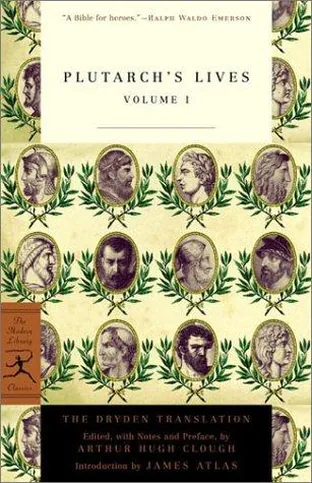
Every omen his sources hand him goes in uncontested: this is a biographer who "makes Herodotus and his giant gold ants of India look like Thucydides," one detractor jabs. He warned us himself, in the Life of Alexander, that he was writing lives, not histories, which leaves 1,568 pages of moral instruction delivered through a narrow cast: "nearly all of Plutarch's heroes are military commanders; and these pages are spattered with blood." The only complete English text in print is still a 1683 team translation issued under Dryden's name (Clough retouched it in 1864), "dry and ponderous" in one reader's words. Small wonder a finisher reports, "It was a marathon. I'm not ultimately sure that reading the whole thing as a whole is worth it."
The case for it and the rest of the canon open with Pro.