— Philosophy —
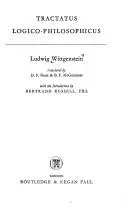
Tractatus Logico-Philosophicus
Ludwig Wittgenstein
— 1921 —
“
Whereof one cannot speak, thereof one must be silent.
Decide its fate
⚖The case for it
Seven propositions with a decimal tree hanging off them. The whole architecture is visible at once, and readers who draw the outline themselves say that is when it became legible. Barely a hundred pages of actual propositions, no padding, every sentence in its numbered slot. Fans read it as an art object rather than a textbook, “beautiful, austere, and sweeping.” The picture theory clicks and reorganizes how you think meaning works. Then 6.54 calls its own propositions nonsense, a ladder to be kicked away once you have climbed it. Admirers call that the most audacious move anyone has made in philosophy.
— the honest librarian
✕The case against
Without formal logic the middle propositions are a wall of notation, and there are almost no worked examples to hold onto, just states of affairs and the N-operator arriving unanchored. The ending reverses everything, and some readers feel trolled rather than impressed. The tone strikes detractors as “a bloodless and conceited bore,” certain of itself in a way argument is not. Cheap editions misprint the symbols. Wittgenstein spent his later career rejecting this picture, which leaves a new reader unsure what is meant to survive. Ogden or Pears is a decision before you start.
— the honest librarian
3h
honest hours
4
sittings
beyond the verdict
if you loved this, read these →