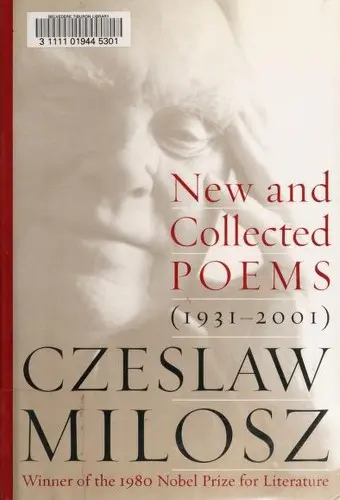
New and Collected Poems: 1931–2001
Milosz witnessed the destruction of Warsaw, survived as a resistance courier, defected to the West, and spent 30 years as a professor in California. All of this found its way into a poetry that is simultaneously metaphysical, historical, and grateful for the sheer persistence of the world. "A Song on the End of the World" and "Dedication" are among the century's essential poems. Nobel Prize 1980.
Even devoted readers admit this 800-page collection is wildly uneven; one counts only about a fifth of the poems as pieces that truly land despite technical skill everywhere else. The disagreement over which decades hold up runs in both directions: one reader argues the later California-period work reads flatter and more sentimental, finding “the quality of his work steadily declines as he matures,” while a separate critical review calls some of the same late lines guilty of “complacent banality to them that feels almost offensive.” A reader who studied Miłosz in a graduate poetry-of-witness seminar says she “vocally expressed my dislike of it during class.” Several poems read more like prose arguments than lyric poems, and one reader flags that “the almost essay like poems did not hit the spot” even for someone who liked the rest of the book.
The case for it and the rest of the canon open with Pro.