Lysistrata
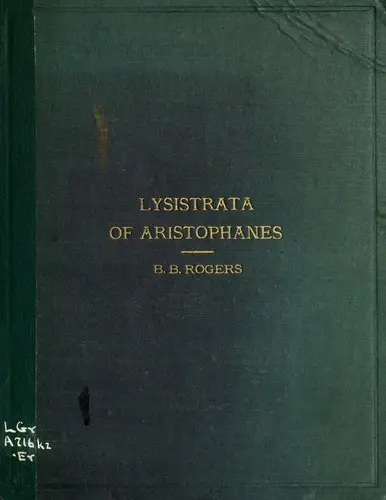
The women of Athens withhold sex until their husbands stop the Peloponnesian War. Aristophanes wrote it as a bawdy comedy during an actual war, and the joke is that it almost sounds reasonable. Twenty-four hundred years later, anti-war protesters still invoke Lysistrata, which says something about both the play and the species.
The politics don't resolve cleanly: women in the play are still written as ruled by appetite, and a magistrate character calls them hysterical, prompting one reader to write in all caps, “THIS IS NEITHER A FEMINIST PLAY, NOR A PACIFIST ONE.” The sustained sight gag of aroused men wandering the stage strikes some readers as more juvenile than clever, one admitting it was “too slapstick for my tastes.” Others argue the chorus of bickering old men and old women is a structural shortcut standing in for organic plot development, and note the play seems to solve its own problem twice, once through the sex strike and again when the women seize the war treasury. Strip away the classroom context, and at least one reader calls it a historical curiosity rather than a play that holds up purely on its own terms.
The case for it and the rest of the canon open with Pro.