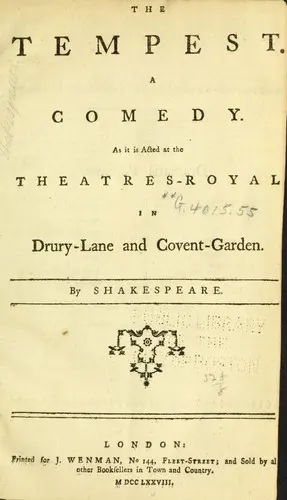
The Tempest
Prospero, a deposed duke and sorcerer, conjures a storm to shipwreck his enemies on his island. Shakespeare's last solo play reads like a farewell to the theater: the magician who controls everything finally breaks his staff and drowns his book. Postcolonial critics have turned it inside out, reading Caliban as the colonized subject. Both readings work.
Nothing seriously threatens Prospero once he controls the island, and critics reviewing straight, unadapted stagings say a protagonist who controls the storm, the shipwreck, and everyone's movement removes any real suspense, landing as “no threat, tension, or suspense of any kind.” The resolution moves fast for some readers, with the wedding masque, Caliban's reform, and Antonio's repentance all wrapped up faster than the setup earned. Students assigned the play register plain restlessness with the classroom experience, and one reader admits the plot itself “lacked a driving force like the others.” Modernized film adaptations fare no better with critics: one relocation gets dismissed as “an odd jumble of ruined buildings, cavalier-style costumes,” proof that reinterpreting the material can scatter the play's focus rather than sharpen it.
The case for it and the rest of the canon open with Pro.